


The textile industry plays a key role in Uzbekistan’s economy: in 2022, the sector accounted for around 22% of the country’s total exports. This confirms its strong potential in the global market.
Our goal is to provide stable income for hundreds of families and consistent employment for thousands of workers.
- Automated sewing lines
- CAD/CAM and 3D modeling
- Recycled fibers and innovative materials
We analyze the environmental impact at every stage to reduce it step by step and make the process increasingly sustainable.
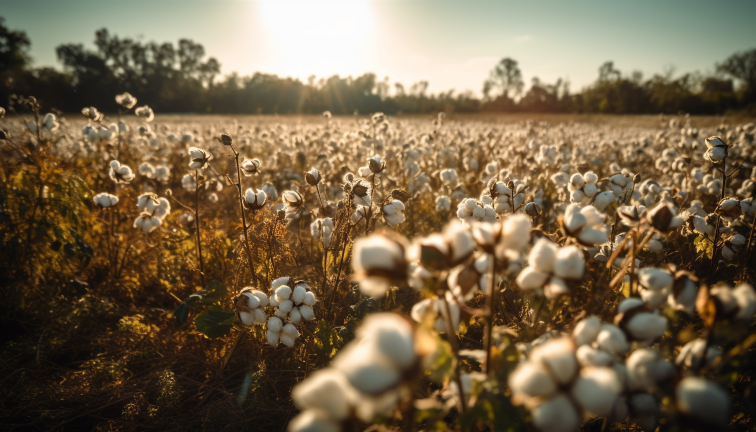
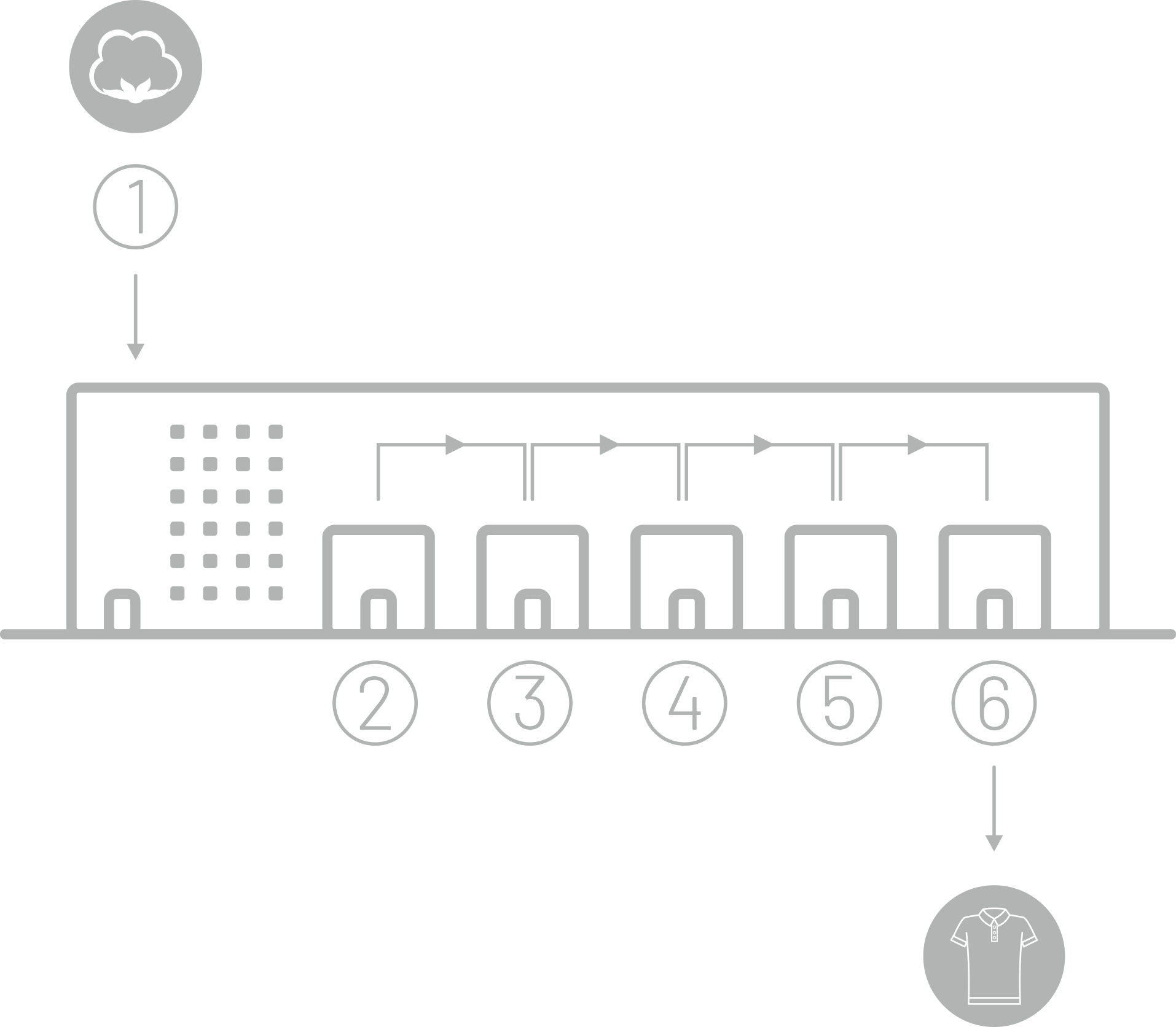
Our journey begins with cotton fields where organic, non-GMO cotton is grown with minimal water usage and only safe, primarily organic fertilizers.
At this stage, cleaned cotton is turned into yarn. We work with trusted suppliers that use energy-efficient equipment and modern waste-processing methods.
Yarn is transformed into fabric using various technologies, including circular knitting machines. This stage is fully supervised by our technologists to ensure consistent fabric quality.
Our partners use environmentally safe dyeing technologies, and all wastewater is treated at ETP facilities to prevent environmental pollution.
In the final stage, garments are produced using eco-friendly trims and sustainable materials.
We offer delivery solutions with reduced carbon emissions: green transportation options, carbon offset programs, and the use of modern vessels and fleets equipped with eco-efficient technologies.
For us, sustainability is not just a slogan — it is a core value at the heart of our strategy.